
Chemotypes
I’ll admit it – I was a skeptical old-school concentrate snob for years. Give me a trusty quartz banger, a torch, and a nice dab rig, and I was happy. “E-rigs are for lazy people,” I used to mutter while perfectly timing my torch sessions and obsessing over temperature control like some kind of concentrate sommelier.
True to Plant Editorial · February 17, 2026
Chemotypes
When Tata Chemicals built a digital twin of their carbonation towers, they weren’t thinking about basil. But the logic mirrors what happens inside every leaf: precise chemical conversions, minimal waste, maximum yield. That single percentage point improvement in carbonation efficiency generated $400,000 annually. Plants have been optimizing similar processes for millions of years.
True to Plant Editorial · January 30, 2026
Chemotypes
Somewhere between nature photography and climate storytelling, the phrase inspired by nature became a shortcut for everything from adaptive camouflage to biodegradable plastics. Stanford’s octopus-inspired synthetic skin mimics color-shifting complexity. Bioprinted microneedles borrow from bee stinger architecture. These breakthroughs represent genuine ecological wisdom translated into positive transformation. But walk down any product aisle and you’ll see the same phrase slapped on bottles with a leaf logo and nothing else.
True to Plant Editorial · January 30, 2026

Chemotypes
If you formulate cannabis products, you already understand how two plants from the same strain can produce dramatically different therapeutic properties. That same principle drives chemotype classification in essential oils. Much like cannabis, plants act as natural chemists, shaping their chemical expression through environment and genetics—concepts explored further in our guide on how plants function as natural chemists.
True to Plant Editorial · November 19, 2025
Chemotypes
When you experience cannabis, you’re encountering far more than Tetrahydrocannabinol (THC) and Cannabidiol (CBD). The aroma profile that defines each strain comes from terpenes—volatile compounds that shape both sensory experience and physiological effects. Research reveals these phytochemicals activate CB1 receptors at 10–50% of THC’s activity, influencing neurotransmitter interactions without causing intoxication on their own.
True to Plant Editorial · November 19, 2025
Chemotypes
While cannabinoids dominate cannabis research, flavonoids quietly shape the cultivar-specific effects consumers experience. These secondary metabolites, derived from flavone with powerful antioxidant properties and formed through plant metabolite formation, represent over 10,000 identified molecules across plant biology. In cannabis, unique compounds like cannflavins deliver anti-inflammatory effects up to 30 times more potent than aspirin.
True to Plant Editorial · November 19, 2025
Chemotypes
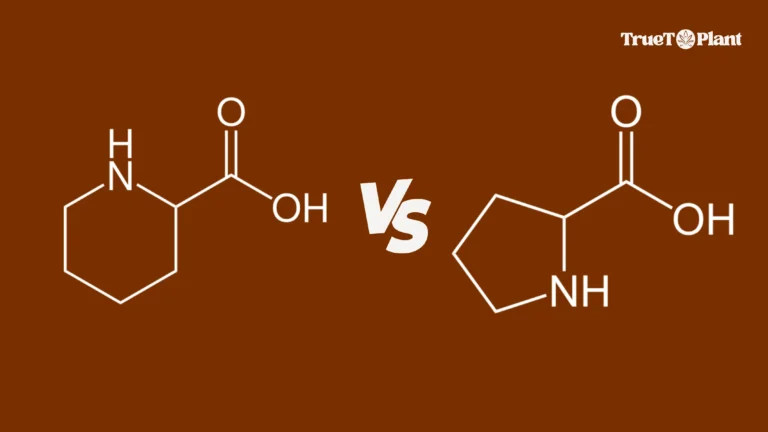
Plants build up a complex chemical world. But not all compounds serve the same role. Some are indispensable to life; others help the plant engage with its environment. In this post we’ll compare primary metabolites and secondary metabolites, explore how they differ in origin, function, and ecology, and why understanding the divide is important when […]
True to Plant Editorial · November 18, 2025
Chemotypes
The Hidden Language of Secondary Metabolites 1. Secondary Metabolites vs Primary Metabolites: What’s the Difference? Plants are far more than passive green beings. Behind their serene leaves and blooms lies a bustling chemical industry, producing hundreds of thousands of compounds that serve purposes beyond growth or reproduction. These are the secondary metabolites, the language of […]
True to Plant Editorial · November 18, 2025
