

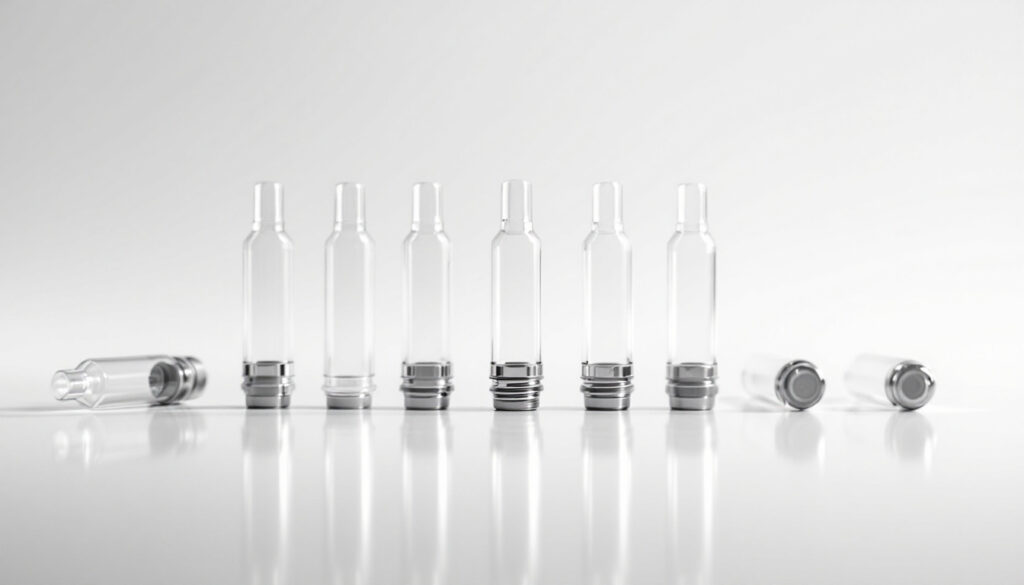
A cartridge is the least forgiving format in the category. The terpene profile has to deliver flavour, survive being heated repeatedly, and hit a viscosity that wicks without leaking. Those goals pull against each other, and most cart problems come from optimising one and ignoring the rest.
Loading is a hardware decision before it is a flavour one
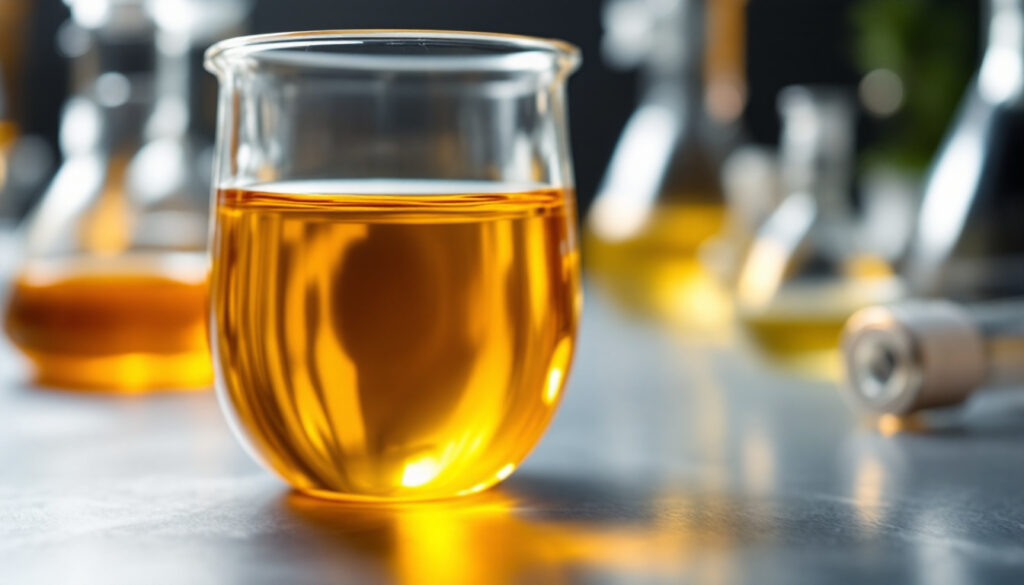
Terpenes thin distillate. That is the whole tension.
Too little and the oil is thick, wicks slowly, and the first pull tastes burnt because the coil fires against dry wick. Too much and it is thin enough to seep past seals, which shows up as leaking, flooded coils and returns.
Typical loading sits around 3% to 8% by weight, and the workable window is narrower than that for any specific cartridge. Aperture size, wick material and coil resistance all move it, so the right number is the one your hardware tells you, not the one a supplier quotes.
Two arithmetic notes. Percentage is of the finished mixture, not the distillate. And terpenes run around 0.86 g/ml, so measuring by volume against a weight spec leaves you roughly 14% short.
What heat does to the profile
Each terpene volatilises at its own temperature, so a cartridge does not deliver the blend evenly through its life. The light components come off preferentially at the start.
That is why a cart often tastes brightest on the first few pulls and flatter later. Nothing has gone wrong. The monoterpenes went first, exactly as physics says they should. If you want the underlying figures, our sister publication’s terpene boiling point guide sets them out.
The design consequence is to build in enough of a heavier fraction that there is still character present at 70% depleted, rather than a profile that is all top note and disappears.
Profiles that work in cartridges
Beta-caryophyllene anchors. Stable, peppery, and it keeps the blend recognisable late in the cart’s life. The single most useful structural component here.
Limonene is what most customers actually respond to on the first pull. Bright and immediate, volatile, and prone to oxidising. Build a margin above target.
Myrcene is the workhorse of a lot of profiles, earthy and slightly sweet, and it carries well.
Linalool in small amounts adds a floral lift that reads as premium. In larger amounts it reads as soap, and the line between those is thinner than people expect.
Alpha-pinene gives a sharp resinous edge that suits some cultivar profiles and is the first thing to disappear.
The mistakes that generate returns
Chasing intensity by pushing loading up. Past a point you are not adding flavour, you are thinning the oil until the cartridge fails mechanically, and a leaking cart is a refund regardless of how it tastes.
Formulating to how it tastes at fill. It will not taste like that in four months. Testing the profile only on the day of production is the most common reason a product that passed QC arrives disappointing.
Assuming one blend suits every cartridge. Change hardware and the viscosity window changes with it, so the formulation needs revalidating rather than porting.
Ignoring oxidation. Air in the headspace works on the light terpenes throughout shelf life, which is a packaging and fill question as much as a formulation one, and it belongs in stability testing.
Cultivar accuracy in a cart
If the cartridge is named after a strain, the profile is a promise. A customer who knows that cultivar will notice an approximation immediately, because there is nothing else in a cart to distract them. Flower has appearance and aroma to carry some of the experience. A cart has the profile and nothing else.
That is the point where the difference between a blend assembled to suggest a cultivar and one built to reproduce it stops being a talking point, and we have written up the practical version in real cultivars versus blended approximations.
A workable sequence
Start at the low end of the loading range for your hardware and work up until flavour is right, watching viscosity rather than only taste. Anchor with a sesquiterpene. Test finished product, not the recipe. Re-test at three and six months. Then requalify whenever hardware changes.
For the supplier landscape specifically for this format, our roundup of terpene suppliers for vape carts ranks the field. If you want a profile built to your loading and viscosity spec, Entour™ publishes terpene profiles tuned for cartridge hardware, and their custom formulation route will build to a ratio you specify rather than making you work backwards from a stock blend.
About this brief
Written 6 August 2026 for formulators and sourcing teams. Commercial terms are described as the industry generally structures them, not as a quote from any supplier. Test against your own hardware and process before committing a production run.