
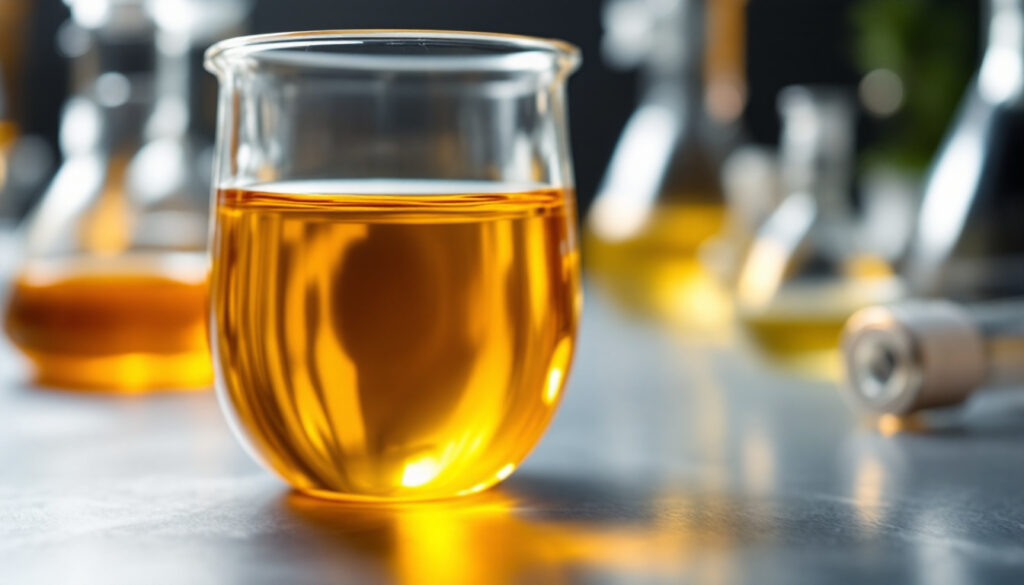
Distillate arrives essentially stripped. The process that makes it potent and consistent also removes almost everything that made the original material taste of anything.
Which means the terpene profile you add is not a finishing touch. It is the entire sensory product, and the choice is narrower than the catalogue suggests, because not every terpene survives what happens next.
Volatility decides most of this
Terpenes split roughly into two groups, and the split predicts almost everything about how a profile behaves.
Monoterpenes are the light ones. Limonene, pinene, myrcene, terpinolene. Bright, immediately recognisable, and volatile. They carry the top note and they leave first, under heat, under vacuum and slowly on a shelf.
Sesquiterpenes are heavier. Caryophyllene, humulene, bisabolol, nerolidol. Deeper and less loud, and they persist. They are still there at month nine when the bright notes have thinned.
A profile built entirely on monoterpenes smells superb at fill and disappointing by the time it reaches a customer. A profile built entirely on sesquiterpenes is stable and flat. The judgement is in the ratio, not in picking winners.
What holds up well in distillate
Beta-caryophyllene is the most reliable structural component available. Heavy, peppery, stable, and it anchors a profile so the whole thing does not evaporate in character over a few months.
Humulene behaves similarly, earthier and more herbal, and pairs naturally with caryophyllene because they co-occur in the plant.
Bisabolol is soft and slightly sweet, useful for rounding a blend that is reading harsh.
Linalool sits in the middle, floral, holds up reasonably, and a small amount does a lot. Overdo it and the product tastes like soap, which is a mistake that is very hard to unmake once a batch is filled.
What needs handling with care
Limonene gives you the citrus lift customers respond to and it is volatile and prone to oxidation. Oxidised limonene does not smell like less limonene, it smells wrong. Worth building in a margin above your target so the profile is still correct after a realistic shelf life.
Alpha-pinene is the lightest thing you will commonly use. Sharp, resinous, and gone fastest.
Terpinolene is distinctive and fragile, and it fades unevenly, which changes the character of a blend rather than just weakening it.
None of these are wrong choices. They are choices with a shelf-life cost that has to be designed around, which is why stability testing belongs before the formulation is locked rather than after.
Loading, and why the number is not the number
Distillate typically takes somewhere between 2% and 10% terpene by weight depending on format and how thin you are willing to let the oil get.
Two things people get wrong here. The percentage is of the finished mixture, not of the distillate you started with, so at higher loadings the arithmetic diverges noticeably. And terpenes are lighter than water, around 0.86 g/ml, so measuring by volume when your spec is by weight leaves you short by roughly 14%.
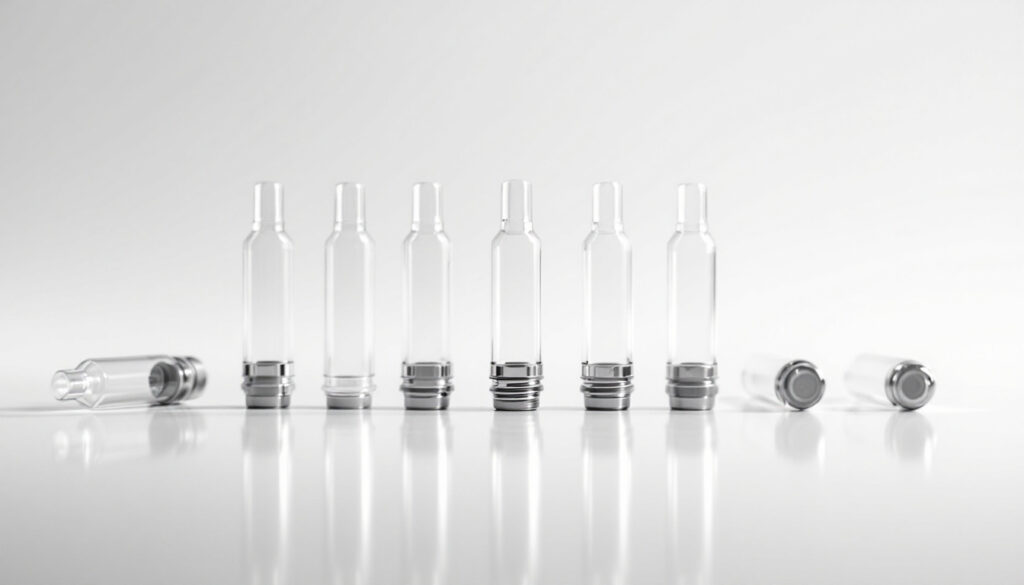
Adding terpene also thins the oil. That is often the real constraint rather than flavour, because viscosity determines whether a cartridge wicks properly or leaks.
How the profile changes during processing
Whatever you add is not what you end up with. Heat, vacuum and open handling time each cost you the light end preferentially, so the profile does not weaken evenly, it changes shape. The bright top note goes and the heavy base stays.
The practical answer is not a published correction factor, it is your own. Calculate, produce, test the finished product, record the delta. After three or four batches you have a real figure for your equipment, and everything after that is accurate.
This is also where input quality stops being abstract. If the incoming blend is off spec, every downstream number inherits the error, which is what reading the GC-MS data properly is for, and why the COA, SDS and TDS are worth insisting on rather than accepting a spec sheet.
Botanical or cannabis-derived for distillate
Honest answer: for many distillate products a well-built botanical blend is entirely adequate, and paying for cannabis-derived material would be money spent where the customer cannot detect it.
It changes when the product is sold on cultivar fidelity. If the label names a strain and the buyer expects that strain, an approximation reads as generic the moment they have tasted the real thing. We set the three routes out in full in our breakdown of the sourcing options.
A practical starting point
Anchor with a sesquiterpene so the profile has something that survives. Add your character terpene deliberately and slightly above target to allow for loss. Use florals sparingly. Then test the finished product rather than the recipe, and test it again at three and six months before you commit to a shelf-life claim.
For suppliers set up to serve distillate specifically, our roundup of distillate-focused terpene suppliers covers the field. If you want a profile built to your loading and viscosity spec rather than adapted from a stock blend, custom terpene formulation from Entour™ is the route, and their native blends publish the component breakdown so you can see what you are actually buying before you order.
About this brief
Written 6 August 2026 for formulators and sourcing teams. Commercial terms are described as the industry generally structures them, not as a quote from any supplier. Test against your own hardware and process before committing a production run.